
Education has always been a powerful force in shaping communities. In a growing and diverse city like Atlanta, its role becomes even more critical—not just in schools, but in everyday life. Strong neighborhoods are often built on access to knowledge, shared learning experiences, and opportunities that allow individuals to grow.
For organizations like Atlanta Links Inc, education is not just about academics. It is about equipping individuals with the tools they need to contribute, lead, and create lasting change within their communities.
Education as a Foundation for Strong Communities
A well-educated community tends to be more resilient, engaged, and forward-thinking. Education helps individuals better understand their environment, make informed decisions, and actively participate in community development.
In many neighborhoods across Atlanta, access to quality education can shape long-term outcomes. When individuals are given the opportunity to learn and grow, they are more likely to:
- support local initiatives
- contribute to economic growth
- build stronger social connections
Education becomes the foundation that supports every other aspect of community life.
Supporting Youth Through Learning Opportunities
Youth development is one of the most impactful ways to strengthen neighborhoods. Providing young people with access to education helps them build confidence, discover their potential, and prepare for future leadership roles.
Programs focused on youth education often include:
- mentorship and guidance
- skill-building workshops
- exposure to real-world challenges
Education often serves as the starting point for leadership development, helping individuals build the confidence needed to take on greater roles.
These experiences go beyond textbooks. They help young individuals understand their role in the community and inspire them to take part in shaping its future.
Bridging Gaps Through Community-Based Education
Not all learning happens in traditional classrooms. Community-based education plays an important role in reaching individuals who may not have access to formal resources.
Workshops, local events, and outreach programs create opportunities for:
- lifelong learning
- skill development
- community engagement
Beyond traditional learning, community outreach programs also play a key role in bringing education directly into neighborhoods.
By bringing education directly into neighborhoods, organizations can bridge gaps and ensure that more people have access to knowledge and opportunity.
Encouraging Lifelong Learning
Strong communities are built by individuals who continue to learn and adapt. Education should not stop at a certain age—it should evolve with the needs of the community.
Encouraging lifelong learning helps individuals:
- stay informed about important issues
- adapt to changes in society
- remain active contributors to their communities
Providing access to education helps young people build confidence, discover their potential, and prepare for meaningful roles within their communities.
This mindset creates a culture where growth and improvement are part of everyday life.
Education and Community Collaboration
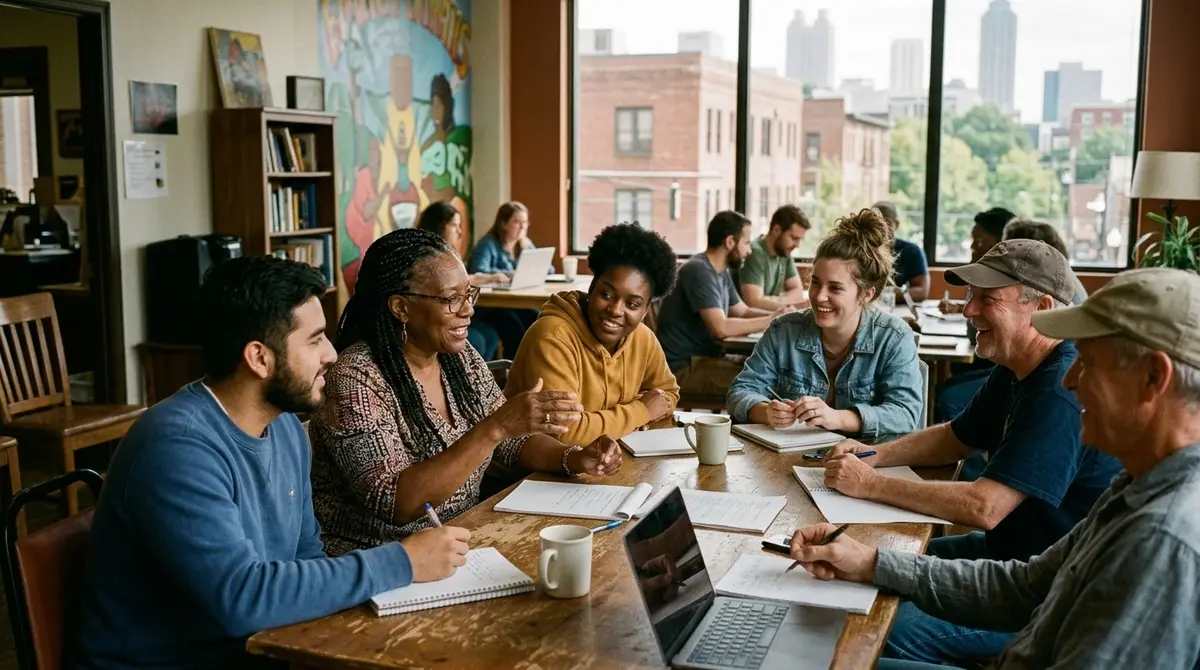
Education also plays a role in bringing people together. When individuals learn together, they build trust, share perspectives, and develop stronger connections.
Collaborative learning environments can:
- strengthen relationships within neighborhoods
- encourage teamwork and problem-solving
- create a sense of shared responsibility
In a city like Atlanta, where diversity is a strength, education helps unify communities and foster mutual understanding.
What This Means for Atlanta’s Communities
Education, in this context, is not just about access—it’s about how those opportunities are used within the community. Whether it’s young people gaining confidence through mentorship, local programs creating spaces to learn, or residents coming together to share knowledge, each effort plays a role in shaping stronger neighborhoods.
In many parts of Atlanta, that impact can already be seen in small but meaningful ways. It’s reflected in how communities support one another, how individuals step into leadership roles, and how learning becomes part of everyday life. Over time, these efforts don’t just educate—they help build neighborhoods that are more connected, more resilient, and better prepared for what’s ahead.